
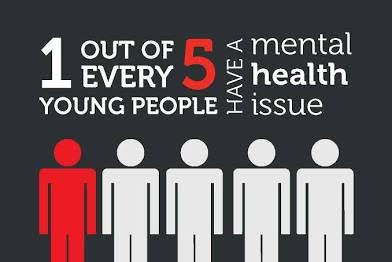
Look around you. According to the CDC (Centers for Disease Control and Prevention), 20% of all adolescents have reported going to therapy. That is one in every five people you meet. For example, an average school in NYC has 600 students; this would mean statistically that 120 of these students attend therapy.
What is teen mental health?
Teen mental health is a growing problem in our world due to the recent pandemic and due to social media. But, due to stigmas, teens mental health isn’t looked upon as such a big problem. However, teen mental health issues may have a much more devastating effect on teenagers than we perceive.
Things teenagers face
Due to the recent epidemic in 2020 with COVID-19, teenagers are more stressed than ever. Teenagers were boxed into their own homes and have nothing to do but be on the internet. This deteriorates their social life, causing social anxiety and a lack of communication skills.
Factors that affect a teen’s mental health are
- Bullying
- Social medias standards
- A lack of support system
- Academic stress
- Peer pressure
- Low self-esteem
- Comparison to others
Hear a professional’s opinion.
According to mental health professional Elizabeth Seidman, “Teens often describe feeling sad, empty, hopeless, or like nothing matters anymore. And low self-esteem is huge too. Many teens I see struggle with not being good enough, not being smart enough, and not being attractive enough.” Teens often will compare themselves to others uncontrollably, which may lead to anxiety, which would likely tie into depression. This is more evident in recent years. Seidman states, “Social media has really changed; it’s been very impactful on teens’ mental health.” Teens are comparing themselves to others on social media, which in turn makes them feel bad about their lives. Particularly for girls, they are comparing their bodies to social media, which impacts eating disorders.”
How can parents recognize early signs that a teen might be struggling mentally?
A main way to spot if a teenager is struggling is to look for any changes.
- If they have changes in their academics (major increase in grades or major decrease)
- changes in sleep schedule (sleeping too much or sleeping too little)
- Trouble focusing
- Spotting if a teen is struggling is if they withdraw themselves socially from family or friends.
- Extreme irritability
What role should parents play in a teen’s mental health treatment?
Parents should first conduct research on their teens situation to better assess what is happening. According to a mental health professional, “I encourage parents to inform their teens of the benefits of therapy, and sometimes when situations call for it, I meet with them separately or include them in joint sessions when clinically appropriate.” Parents should create a supportive environment at home while also having some structure. When teens have too much responsibility at home, it may cause extra stress. “The parents may really need to find other solutions to remove inappropriate responsibilities from their teens.”
Hear it from a teenager
Thoughts that a sixteen-year-old student was feeling before attending therapy were self-harm, the feeling of wanting to disappear, negative thoughts about herself, and the feeling of not being able to speak to her parents. “I feel like I had nobody to trust. I didn’t know how to speak up, so all my feelings were only through my journals.” After understanding her situation and actively working to make it better, she states, “The progress for me is that I’ve been getting help with my friends, and I’ve been having much better mental health.”
Where to find help
If you are struggling with mental health issues, you are not alone. There are many ways to seek help. If you are uncomfortable with speaking to a hotline such as 988, speak to a trusted friend or adult.
Everyone is different; speaking to a friend may be enough, but others may need professional therapy.
- For teenagers in NYC, a website for free professional therapy is Talkspace.
- If you need someone to talk to, 988 is a hotline that runs 24/7.
- #1 rated online teen therapy is Teen Counseling.

 The Blindspot