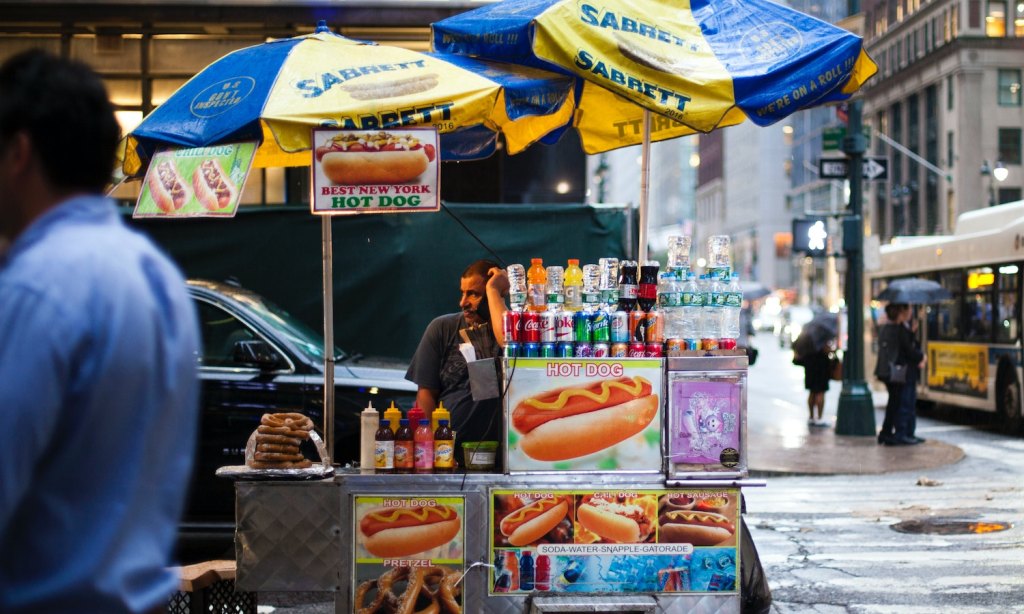
From carts sizzling with halal food to tables lined with handmade jewelry and fresh fruit, street vendors are a vital part of New York City’s culture and economy. Yet, despite their visibility on city streets, these vendors, many of whom are immigrants, low-income workers, and people of color, face a complex and often hostile system that criminalizes their work and spreads misinformation about their impact on public life.
There are more than 20,000 street vendors across NYC, according to the Street Vendor Project (SVP), a nonprofit that supports the rights and dignity of these small-scale entrepreneurs. Most vendors operate informally because of outdated city regulations and a cap on vending permits that hasn’t changed since the 1980s. Currently, the city only issues 5,100 mobile food vending permits, leaving thousands on a years-long waitlist or forcing them into an underground market where renting a permit can cost up to $25,000, just to be able to legally sell food.
Street vendors are frequently accused of causing overcrowding, blocking sidewalks, or hurting nearby businesses. But research by the Immigration Research Initiative (IRI) tells a different story: most vendors operate legally, pay taxes, and contribute positively to their neighborhoods. Many of them are long-time residents supporting their families through this work, and in many cases, they fill food and service gaps in areas lacking affordable options.
The real issue, advocates say, is not the vendors themselves, but a system that criminalizes their livelihood. Tickets can cost up to $1,000 for minor infractions such as vending too close to a store entrance or lacking an up-to-date permit, fines that are often more than a vendor makes in a day. In extreme cases, vendors face arrest or have their property confiscated without warning.
The Street Vendor Project, an initiative by the Urban Justice Center, has been at the forefront of advocating for vendor rights. In 2021, the City Council passed Intro 1116, a bill that will eventually release more food vending permits, an important step, but one that only begins to address decades of neglect. The bill caps permit increases at just 445 new ones per year, meaning it could still take decades for demand to be met.
Organizations like the Street Vendor Project continue to push for full decriminalization of street vending and investment in systems that support vendors rather than punish them. They also provide legal services, training, and direct advocacy to help vendors protect their rights and grow their businesses.
Street vendors aren’t just economic contributors but cultural storytellers. A tamale stand run by an immigrant mother. A table of vintage vinyls set up by a local DJ. A halal cart that feeds dozens of taxi drivers each lunch hour. These aren’t just businesses, they’re lifelines to community, culture, and connection.
Many vendors also show up for their communities beyond commerce. During the COVID-19 pandemic, vendors distributed masks and meals, and were among the first to return to the streets when indoor work shut down. Despite being labeled as “informal,” their role in the city’s resilience was anything but.
In interviews collected by SVP and IRI, vendors speak of their deep ties to the city. One vendor, Maria, has been selling fruit in the Bronx for over 15 years: “This is my job. I support my family with this. But every day, I worry if the police will take my cart. I just want to work with dignity.”
If you’re a vendor or want to support vendor rights:
- Visit StreetVendor.org for organizing, legal help, and advocacy.
- Read policy updates and get resources from the NYC Office of Street Vendor Enforcement.
- Support campaigns and research from the Street Vendor Project at the Urban Justice Center.
- Learn more about the community impact of vendors at Immigration Research Initiative.
Street vendors are workers, business owners, and neighbors, yet they’re too often treated as criminals for simply trying to make a living. With better public understanding, supportive policy, and continued advocacy, New York City can become a place where vending is not only legal, but respected.

 The Blindspot